
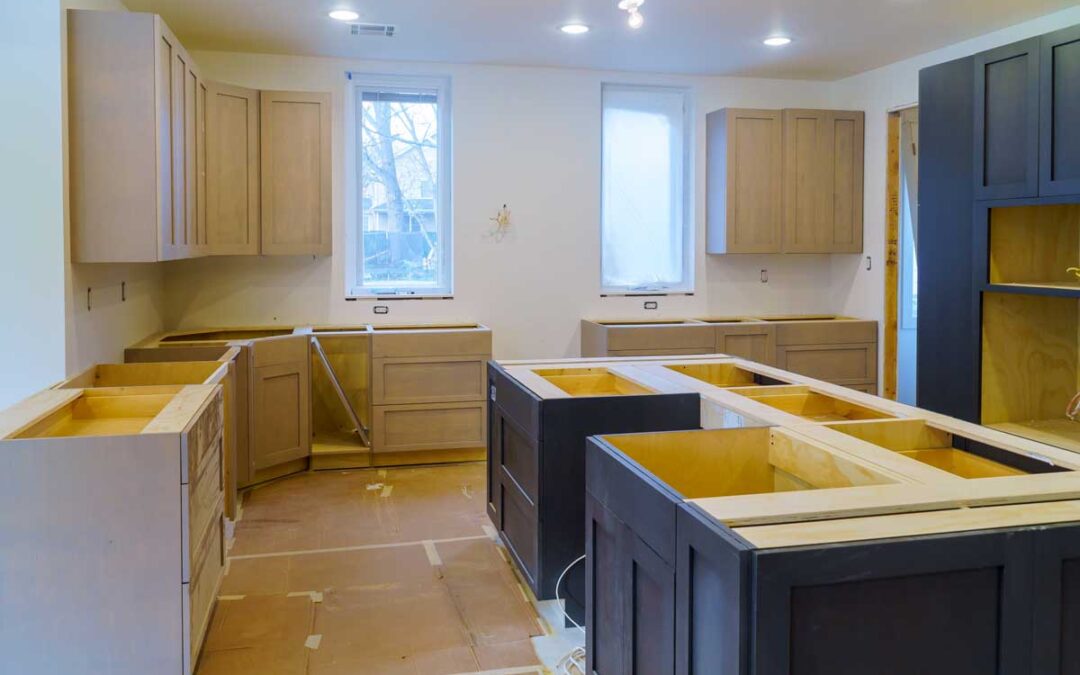
Kitchen remodels are exciting, but they also temporarily disrupt daily life in ways many homeowners underestimate. It’s easy to focus on cabinets, layouts and finishes while overlooking the practical logistics that shape your day-to-day experience during construction. A successful remodel doesn’t begin with demolition, it begins with a thoughtful kitchen renovation preparation guide. From insurance and utility planning to protecting valuables, setting up a temporary kitchen, preparing pets and kids, and adjusting your food budget, the right steps taken early can make the entire renovation process significantly smoother and far less stressful.
Confirm Insurance & Project Protection for Your Kitchen Remodel
Before any construction begins, take a few proactive steps to protect your home and your investment. Start by notifying your homeowner’s insurance carrier. Let them know you’re preparing for a kitchen remodel and confirm your coverage during construction. Some policies require notification when significant renovation work is underway.
Next, verify your contractor’s licensing and request updated insurance certificates. A reputable design-build firm will provide proof of liability coverage and workers’ compensation without hesitation.
You may also want to ask whether builder’s risk coverage is necessary for your project. While not always required for interior remodels, it can provide additional protection depending on the project’s scope and duration.
Finally, document existing conditions. Take detailed photos and videos of your kitchen, adjacent rooms, flooring and nearby furniture. This isn’t about expecting problems; it’s about eliminating ambiguity.

“Before we start any kitchen remodel, I always recommend homeowners make a quick call to their insurance provider,” advises Ron VanderBeken, Owner & General Manager of VanderBeken Remodel. “It’s a simple step that protects everyone and prevents surprises if something unexpected happens.”
Plan for Utility & Heating/Cooling Changes
One of the most underestimated aspects of kitchen remodel disruption is how utilities and HVAC systems are affected. Temporary shutoffs are common, and water, gas and electricity may be unavailable for short periods during demolition, rough-in work or final connections. Planning for those interruptions prevents unnecessary frustrations.
When walls are opened, insulation is removed or ductwork is adjusted, your HVAC system may perform differently. Airflow changes. Temperatures fluctuate. In winter, remodel zones can feel cooler, and in summer, your air conditioning may struggle to keep up. Your energy bills may even temporarily increase while your systems work harder to compensate for open spaces and dust barriers.
Seasonality also matters. A winter remodel in the Pacific Northwest requires extra considerations for heat retention, or a summer remodel may require additional cooling strategies. Preparing for minor discomfort and adjusting expectations goes a long way towards reducing stress.
“Clients are often surprised that their heating or cooling costs can shift during a remodel. When spaces are opened up, your system works differently. We help homeowners plan ahead for that,” explains Jennifer VanderBeken, Owner and Director of Operations.
Create a Temporary Kitchen That Actually Works

The single biggest quality-of-life factor during construction is your temporary kitchen. Too often, homeowners throw a microwave on a folding table and assume they’ll “figure it out” along the way. A better approach is to intentionally design a short-term setup that functions well for your family.
Choose a location thoughtfully. Common options include:
- Basement
- Laundry room
- Dining room
- Garage (season permitting)
Equip your temporary kitchen with essentials:
- Microwave
- Toaster oven
- Hot plate or induction burner
- Coffee maker
- Electric kettle
- Slow cooker or Instant Pot
Temporary sink solutions also vary. Some homeowners use the laundry room’s utility sink. Others rely on bathroom sinks for light washing and use disposable dinnerware during peak construction weeks.
“A temporary kitchen doesn’t need to be fancy—but it does need a plan,” Ron says. “Homeowners who think this through ahead of time are always less stressed during construction.”
Other adjustments:
- Extension cords and power strips must be used safely. Avoid overloading circuits and ensure cords are not tripping hazards.
- Food storage will require consideration. Limited refrigeration space means buying smaller grocery quantities and planning meals more strategically.
For inspiration on what makes a finished kitchen worth the temporary inconvenience, take a look at these exciting kitchen transformations.
Protect Valuables & Adjacent Spaces of Your Home
Even with careful containment systems, dust travels. To protect your belongings, remove fragile items, artwork, heirlooms and decorative objects from rooms adjacent to your kitchen. If cabinetry extends into nearby spaces, pack up those areas as well. In addition, clear countertops completely. Fully empty cabinets, and not just the ones being replaced.
Professional teams will install floor protection paths, but you should still anticipate increased foot traffic between your home’s entry points and the kitchen. If you have specialty flooring, rugs or high-end finishes nearby, consider additional protective coverings.
Your garage and driveway may be used as staging areas for material deliveries and dumpster placement. Plan accordingly and relocate your vehicles if necessary.
Security also deserves attention. Your remodeling team needs daytime access. Establish clear protocols for locking up, alarm systems and entry points. Over-preparing is almost always better than under-preparing.
“We install protections, but homeowners should still remove anything that is truly irreplaceable,” Jennifer says. “Since remodel zones expand and contract daily, it’s best to clear more than you think you’ll need.”
Plan Ahead for Pets

Pets are sensitive to noise, disruption and unfamiliar people entering their territory, and the sounds of demolition, power tools and deliveries can create anxiety and safety risks. In addition, construction zones often involve open doors, exposed wiring, sharp tools and debris.
Even the most well-behaved pets can react unpredictably under stress. That’s why we recommend protecting your pets with a pet plan that includes:
- Safe zones away from construction
- Adjusted walking schedules
- Secure barriers near work areas
- Feeding routines that avoid chaos
Some homeowners even choose daycare or short-term boarding during the loudest demolition phases, or ask family, friends or neighbors to help watch pets temporarily.
“Pets are one of the most overlooked parts of remodel planning. Construction noise and open doors can create real safety risks,” Ron says. “We always talk through a pet plan with our homeowners before day one.”
Prepare the Kids for the Disruption
Children thrive on routine, and a kitchen remodel will temporarily alter what’s familiar. Take your kids aside and explain in advance what will happen. Discuss noise levels, changes to schedules and mealtime routines, and which areas will be off limits.
Clearly define safe zones vs. construction zones. Reinforce boundaries consistently. If possible, coordinate particularly loud phases of construction with school hours. For families with younger children at home, alternative daytime arrangements may be helpful during demolition. Preparation reduces meltdowns—for parents and children alike.
You can also turn your remodel into a learning experience. Older children often enjoy seeing framing, plumbing and electrical systems before the walls are closed. Understanding the process can reduce fear and increase excitement about the new kitchen.
Build an Eating-Out & Grocery Strategy

“Food costs often rise during a kitchen remodel. Not necessarily because families fail to plan, but because convenience becomes more appealing during busy weeks,” Jennifer says. Without a functioning cooktop or full refrigeration available, takeout becomes tempting. “We encourage clients to budget for that up front.”
Build a realistic dining-out budget in advance. Factor in:
- Busy workdays
- After-school activities
- Social commitments
- Unexpected schedule shifts
Balance takeout with simple-to-prep meals that work well in a temporary kitchen. Slow cookers, toaster ovens, countertop convection ovens and induction burners can handle more than you think.
Buy smaller quantities of groceries to reduce spoilage. Track food costs during construction so spending doesn’t creep higher than expected. Planning ahead makes the inconvenience manageable.
Set Communication & Schedule Expectations
Finally, one of the most important kitchen remodel disruption tips involves communication. The more expectations are aligned early, the smoother the construction phase will feel.
Clarify expectations before construction begins by asking questions like:
- Will there be weekly progress meetings?
- How are decision deadlines communicated?
- When should material selections be finalized?
- What are typical delivery windows?
- What access hours will the team need?
Even the most detailed kitchen remodel planning checklist cannot eliminate every surprise. Hidden plumbing issues, delayed materials or inspection timing may require adjustments. The key is transparency and responsiveness.
It’s important to understand why layout planning matters so much for daily family life. This article explains why the right kitchen layout matters for Edmonds-area families.
When it comes to how to get ready for a kitchen renovation, preparation reduces stress more than any design decision. Beautiful finishes and thoughtful layouts matter, however, homeowners who experience the least disruption are the ones who invest time in logistics before demolition begins.
Contact VanderBeken Remodel Today
Choosing VanderBeken Remodel means partnering with a design-build team that understands both the craftsmanship and the complexity of a high-end kitchen renovation. With decades of experience serving discerning homeowners throughout the Snohomish County area, our team delivers thoughtful design, meticulous planning and skilled execution—all managed under one roof. This integrated approach creates clarity, accountability and a smoother remodeling experience from concept through completion. You’ll also enjoy our fixed investment price and advanced estimating system that gives you control and predictability over costs.
What truly sets us apart is our commitment to preparation and communication. We anticipate challenges before they arise, guide our clients through decisions with confidence and treat every home with respect and care. The result: not just a beautiful kitchen, but a professional and enjoyable remodeling process.
If you’re preparing for a kitchen remodel and want a clear, organized pre-construction roadmap, contact VanderBeken Remodel and schedule your planning consultation. Or call us directly at 425-870-8123. We’re a family owned, boutique-style design-build firm that isn’t just a contractor—we’re your neighbors, dedicated to making your lives better one home at a time.
Stay informed with planning insights and remodeling guidance by subscribing to our newsletter.