
Choosing the right furnishings for your newly remodeled traditional kitchen can feel both exciting and daunting. While cabinetry, countertops, and flooring set the stage, the furnishings you choose help shape how the space feels and functions day to day. Beyond completing the remodel, they also tell your story and reflect your tastes and personality. Anchored in classic European and early American architectural traditions, traditional design focuses on a cozy, welcoming feel, incorporating rich craftsmanship, warmth, and symmetry. In this article, we look at how to furnish a traditional Snohomish County kitchen, including balancing function and style.
Choosing the Right Kitchen Table & Seating
In the traditional kitchen style, it’s the dining table that is the focal point within the space. When choosing materials, consider wood tones that complement the cabinetry rather than competing against it. Matching tones exactly can make the interior feel a bit flat. In contrast, a table in a slightly lighter or darker finish adds depth and delivers a more personable, lived-in character.
Traditional kitchen designs often feature pedestal, trestle, or farmhouse table shapes. The table you choose needs to suit the room’s proportions and style. Round pedestal tables encourage conversation and work well in smaller breakfast areas, while rectangular trestle or farmhouse tables are ideal for larger family kitchens and entertaining.
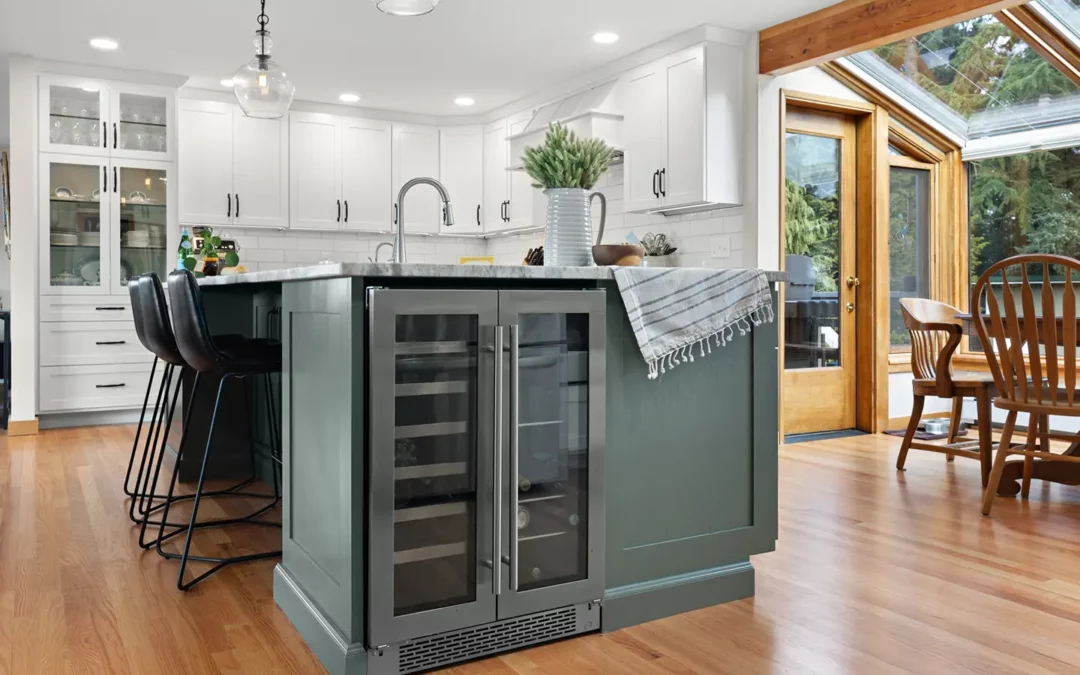
Seating is another feature to carefully consider and can go a long way in helping to define the kitchen’s character and ambiance. Mixed seating works well in a traditional kitchen design. Upholstered dining chairs bring extra comfort and soften the natural wood found throughout many kitchens in this particular design scheme. Around an island, stools with wood frames, woven seats, or subtle upholstery help maintain a cohesive look without feeling overly coordinated.
“I never try to match the table wood to the cabinetry exactly — that’s actually one of the biggest mistakes I see homeowners make. A table that’s a shade or two off from your cabinets gives the room depth and keeps it from looking like a matched furniture set. In a traditional kitchen, I’m usually looking for a table with some age or character to it — a turned pedestal leg, a trestle base — something that feels collected rather than ordered from a catalog,” says Jennifer VanderBeken, Owner & Director of Operations.
Kitchen Cabinet Hardware & Finishing Touches
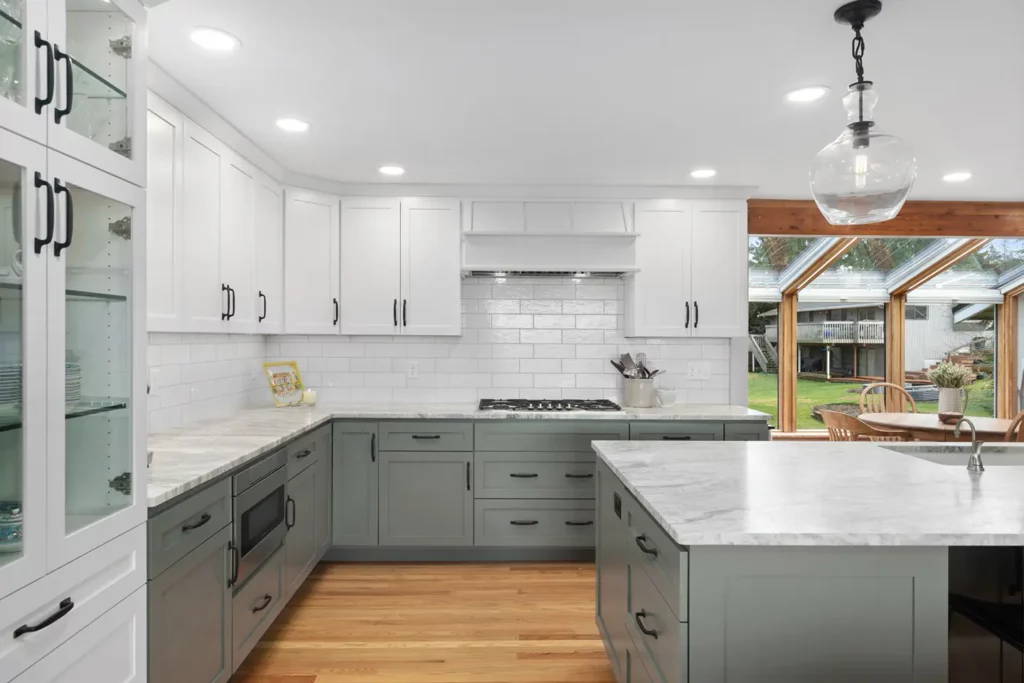
Cabinet hardware, while small, can have a big impact on the look of your kitchen interior. Classic finishes such as brass, oil-rubbed bronze, and aged nickel work particularly well because they add warmth and match the timeless feel of traditional-style kitchen decor.
Hardware decisions begin much earlier in the design process than many homeowners realize. The knobs and pulls you choose need to complement cabinet door styles, cupboard and drawer constructions, and even hinge placements. Choosing these details during the design phase creates a smoother result and gives later furnishing decisions a clear direction.
Other small finishing touches and decorative elements are also incredibly important to bear in mind. Features such as plate racks, carefully styled open shelving, wooden cutting boards, glass jars, and vintage-inspired accessories all contribute to a kitchen that has a sense of history and a distinctive personal touch.
“Hardware is one of those decisions that gets made way earlier in the process than most homeowners realize — we’re talking about it before the cabinet boxes are even installed, because the door and drawer construction has to accommodate it. The mistake I see most often is when someone waits until the very end to pick hardware, almost as an afterthought, and by then they’re limited by hinge placement or drawer configuration that’s already locked in. When it’s coordinated early, the hardware and the furnishings that come later actually feel like they belong to the same kitchen,” says Ron VanderBeken, Owner & General Manager.
Lighting Fixtures That Complement Traditional Kitchens
Lighting can make or break any kitchen style. It’s essential for both the aesthetic of the interior and practicality and safety. When designing a traditional kitchen, consider choosing lighting that echoes the architectural details and features already present in the room.
Pendant styles over kitchen islands work well, including lantern, schoolhouse, and bell-jar designs. Their shapes embody a timeless quality that complements classic cabinetry and millwork. A pair or a trio of pendants over the island will further define this central workspace while adding visual balance.
Over a dining table, a modest chandelier or decorative flush-mount fixture can create a natural focal point without overwhelming the room.
Layered lighting is another essential feature of a traditional kitchen style that is simultaneously modern in both feel and function. Task lighting beneath cabinets improves visibility for food preparation, ambient lighting provides comfortable overall illumination, and accent lighting can highlight glass-front cabinets, open shelving, or decorative features.
“Lighting is where I see people play it too safe. A traditional kitchen can absolutely handle a fixture with some presence — a lantern-style pendant or a small chandelier over the table — without tipping into feeling formal or fussy. What I’m really doing is picking a silhouette that echoes something else already in the room, whether that’s the curve of an archway or the style of the cabinet doors, so the lighting feels like it was designed for the space instead of dropped into it,” says Jennifer.
Rugs, Window Treatments & Soft Furnishings for Kitchens
Textiles are an important part of traditional style kitchen décor. The right textiles add warmth, texture, and a lived-in feeling while also reflecting your tastes.
These additions can be relatively simple. For example, a runner placed in front of the sink or range can soften the look of a beautiful wood or tiled floor and also make it feel a little more comfortable to stand on for extended periods of time. Make sure to select durable, low-pile rugs that are easy to clean and are of a suitable size, so they don’t become a trip hazard.
Window treatments are another important area to think about. Café curtains – half-height and designed to cover the bottom portion of a window – are a classic choice for traditional kitchens as they offer privacy while still allowing plenty of natural light to fill the interior. In larger spaces, simple linen drapes or Roman shades introduce softness without feeling overly formal.
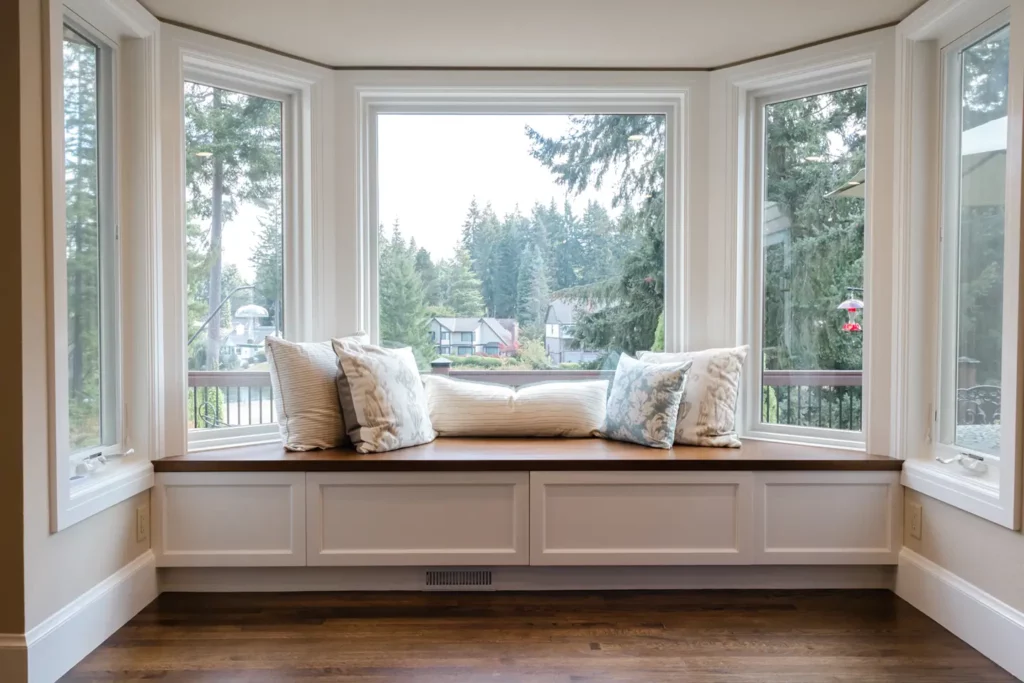
Fabric and pattern choices can finish the look. Subtle florals, classic stripes, and muted plaids, among other options, work well alongside traditional cabinetry and furniture. Seat cushions and table linens soften hard surfaces and features while supporting the overall design style.
“Once the stone and tile go in, a kitchen can start to feel a little cold, even when the design is exactly what the homeowner wanted. That’s where soft furnishings do their job — a runner in front of the sink, café curtains instead of blinds, a bit of pattern on the seat cushions. Those are the pieces that make a beautifully built kitchen feel like it’s actually lived in,” says Jennifer.
Balancing Function and Style: Storage & Layout Considerations
Furniture pieces that add storage without disrupting the overall workflow of the space are a key element in traditional style kitchens. A well-placed hutch, buffet, or antique-style free-standing cabinet can provide extra space for serving dishes, glassware, or linens while reinforcing the room’s timeless appeal. When displaying meaningful collections or family heirlooms, these pieces add wonderfully to the kitchen’s personality and ambiance.
Placement matters. Each furnishing needs to work with the kitchen layout established during the remodel. Walkways between work zones and other designated spaces should remain clear, and furniture should never make everyday tasks feel awkward or cramped. When traffic patterns are interrupted, even the most beautiful item of furniture quickly loses its appeal.
When choosing kitchen furniture for a traditional interior design style, consider how each piece supports how you use the kitchen and dining area. Extra storage is valuable but only when you also preserve comfortable circulation and easy access to cabinets and appliances for every member of your family.
“Furniture placement in a kitchen isn’t just an aesthetic decision — it has to respect the work triangle we designed the space around in the first place. I’ve walked into finished kitchens where a beautiful hutch or buffet has been placed right in a main traffic path, and it undoes a lot of the planning that went into the layout. My advice is always to think about how you actually move through the kitchen before you think about how a piece looks in the corner,” says Ron.
Plan Your Next Snohomish County Kitchen Remodel
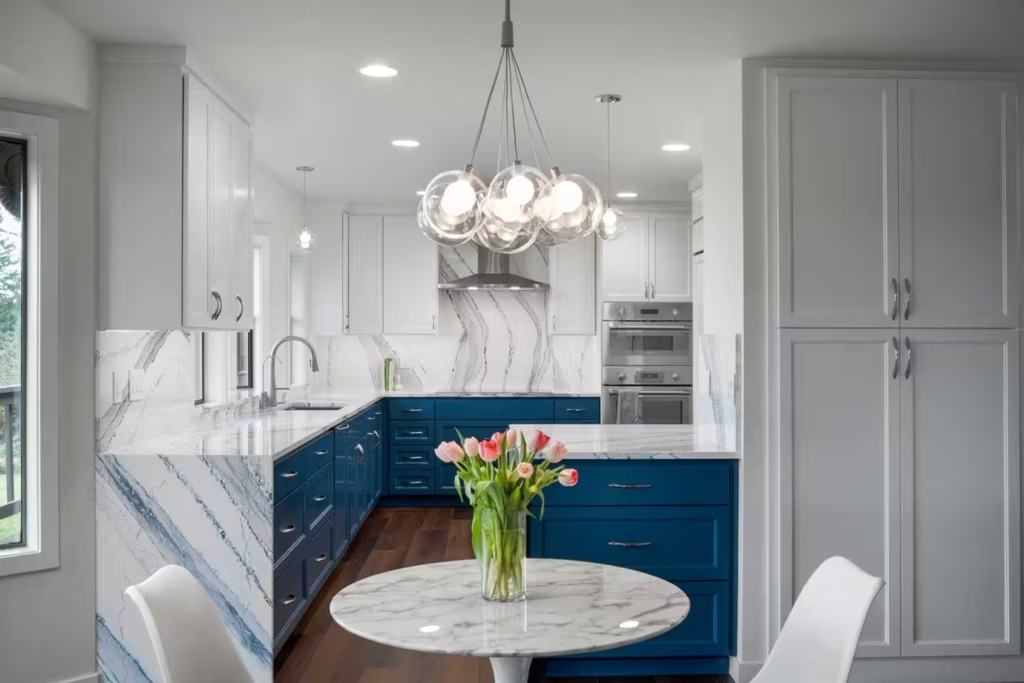
The furnishings you choose are what will ultimately give your newly remodeled Snohomish County kitchen its lasting personality. Carefully chosen furniture, lighting, textiles, and finishing touches contribute to a space that’s as practical as it is beautiful while retaining a welcoming ambiance for family and guests alike.
If you’re planning a kitchen renovation and would like professional guidance from the earliest design decisions through to completed construction, the VanderBeken Remodel design-build team is ready to help.
VanderBeken Remodel is a trusted, family-owned home remodeling company proudly serving Snohomish County since 2007. We specialize in interior remodeling for both residential and historic homes, with a strong foundation in craftsmanship, hospitality, and building lasting relationships with the homeowners we serve.
With decades of hands-on experience in historic preservation, our team is uniquely experienced to help you navigate the balance between preserving your property’s original features and achieving your vision for a home that is more connected with the outside.
When you’re ready to transform your home while honoring its history, consult with VanderBeken Remodel—and let’s bring your vision to life with thoughtful creativity and respect for the past.